Swing Handle Locks for Electrical Cabinets: A Buyer's Guide
The lock on an enclosure door is easy to overlook — right up until a cabinet that won't seal, a handle that's awkward to operate in gloves, or a lock that jams turns into a service call. A swing handle lock is the part that keeps electrical cabinets, server racks and outdoor enclosures both accessible and closed. Here's how to pick one that won't come back to haunt you.
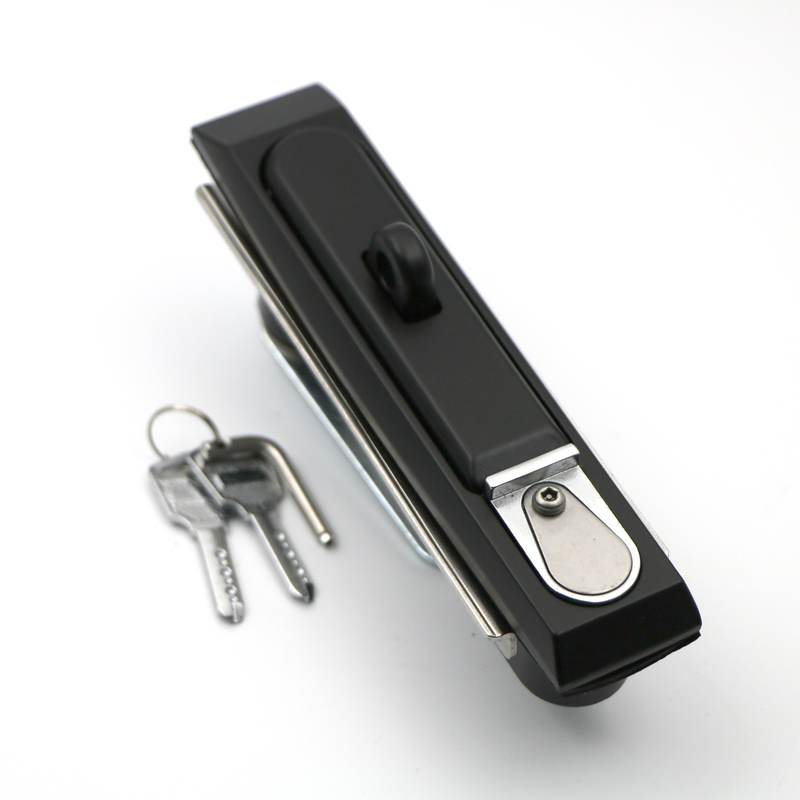
What Is a Swing Handle Lock?
A swing handle lock is a cabinet latch with a handle that pivots open and shut — the flat rectangular handle you see on electrical control cabinets, server racks and industrial equipment doors.
The version that matters most for enclosure work is the compression swing handle. On a compression lock, turning the handle pulls the door tight against the frame and its gasket as it closes. That single action is what keeps dust and water out and stops the panel from rattling. A non-compression latch simply holds the door shut — fine for a simple cover, wrong for a gasketed or weather-sealed cabinet.
There are two common configurations:
- With a key cylinder — the handle locks and unlocks with a key. For cabinets that should only open to authorized personnel.
- Without a key cylinder — a plain handle, often padlockable. For cabinets that just need a positive mechanical latch, or where the end customer adds their own locking.
The right choice is driven by the application and its access-control needs — not by price alone.
Where Swing Handle Locks Are Used
- Electrical distribution cabinets — the door has to seal and stay shut, and the handle has to operate reliably for years.
- Server racks and data cabinets — accessed constantly, so the latch needs to open and close smoothly through thousands of cycles.
- Power and control cabinets — a locked door protects live terminals and keeps unauthorized hands out.
- Equipment and machine doors — control panels, HVAC units, and industrial enclosures.
- Outdoor enclosures — telecom, solar and energy-storage cabinets where dust and weather are a daily reality.
7 Things to Check Before You Buy
- Compression or not. If the cabinet has a gasket or needs any degree of sealing, choose a compression handle — it's what pulls the door tight against the seal as it closes.
- Mounting type. Surface mount sits on the door face; flush (recessed) mount sits into a cut-out. Confirm which your door design uses before ordering.
- Key cylinder or not. Match the access-control requirement: keyed for restricted access, keyless (or padlockable) for simple latching.
- Body material. A die-cast zinc alloy body with a powder-coated finish is the standard for a lock that's strong enough for real use and holds up in an indoor or sheltered outdoor cabinet. Ask what the body and handle are actually made of — the material is the first place cost gets cut.
- Ingress protection. IP54 means the closed cabinet is protected against dust ingress and splashing water — the practical minimum for anything that isn't in a clean, dry room. Match the rating to where the cabinet actually lives.
- Panel thickness. Confirm the lock's clamping range covers your door thickness, so the handle closes tight without play.
- MOQ. For this category the factory minimum is often in the low hundreds — confirm the MOQ up front, and whether the supplier can cut keys to your system or add your branding.
Common Problems — and How to Avoid Them
"The handle went stiff after a few months."
Usually a cheap latch or a material that wasn't up to the job. A die-cast zinc alloy body with a proper finish is built to hold up over years of use.
"The cabinet door doesn't seal."
You fitted a non-compression latch on a gasketed door. A compression swing handle is what actually pulls the door against the gasket.
"The lock jams."
Often a latch or key cylinder that was never meant for the dust and humidity of the site. Check the ingress rating and the material before committing to a large order.
"I ordered keyed, but the keys don't match my existing system."
Specify keying up front — whether you need keyed-alike (KA), keyed-different (KD), or the supplier to cut to your existing key codes.
Why the Supplier Matters
A swing handle lock looks simple, but the difference between suppliers shows up in the metal. A real manufacturer controls the die-casting, the powder-coating and the assembly in one place — which is why they can hold a consistent fit, a correct IP rating and a smooth key cylinder across thousands of units, and fix a problem in days instead of months.
Before you commit to a large order, check three things:
- Is it a real factory or a trading company? A factory owns the casting and finishing; a trading company is one more layer between you and the fix when something's wrong.
- Can they match your keying and branding? If you already run a keying system, or need your logo on the handle, confirm they can do it.
- Will they send a sample? Any serious supplier will provide a pre-production sample so you can test the compression feel, the seal and the key cylinder before bulk ordering.
At WellLock, we manufacture compression swing handle locks for electrical, server and outdoor cabinets — die-cast zinc alloy, black powder-coated, IP54, surface mount, available with or without a key cylinder, MOQ from 120 sets. We also produce T-handle locks, brass padlocks and industrial paddle locks from our own factory in Ningbo, China. Tell us your cabinet type and access-control needs, and we'll spec the right lock with you.
Get a Recommendation →